


BPH Treatment Options: Understanding Symptoms, Causes, and UroLift®
Updated: Sep 3
💡 At a Glance (Quick Summary):
Frequent nighttime urination (nocturia), a weak urine stream, and sudden urgency in men over 40 are classic signs of Benign Prostatic Hyperplasia (BPH), or an enlarged prostate. Unlike daily medications that can cause fatigue and sexual dysfunction or invasive TURP surgery requiring tissue removal, the UroLift® System lifts and holds blocking prostate tissue out of the way without cutting, heating, or destroying tissue. Delivered by board-certified urologist Dr. Lawrence Hatchett, MD in Marion, Illinois, this minimally invasive in-office procedure restores natural urinary flow while preserving sexual function.
For many men, changes in urinary habits begin subtly — an extra trip to the bathroom at night, a weaker stream, or a growing sense that the bladder never fully empties. At first, these shifts are easy to overlook. Over time, though, they can begin to interfere with sleep, travel, work, and overall day-to-day comfort.
What often gets normalized is actually a very common medical condition.
BPH Treatment Comparison: Medications vs. Surgery vs. UroLift®
When men seek help for BPH, they are usually offered daily prescriptions or invasive hospital surgery. Below is a direct comparison of how the UroLift® System at Hatchett Rejuvenation / Urology Institutes compares to traditional alternatives:
Treatment Feature | BPH Medications (Alpha-Blockers / 5-ARIs) | Traditional TURP / Laser Surgery | UroLift® System (Dr. Lawrence Hatchett) |
Primary Action | Relaxes muscle or slowly shrinks prostate volume | Cuts, burns, or vaporizes excess prostate tissue | Lifts and holds obstructive tissue out of the way with tiny implants |
Treatment Type | Daily, lifelong pill regimen | Surgical hospital procedure under general anesthesia | Minimally invasive in-office or outpatient procedure |
Recovery Time | Immediate (requires ongoing compliance) | 3 to 6 weeks; overnight hospital stay & catheter required | Rapid recovery; most patients return to normal activity in days |
Impact on Sexual Function | Potential loss of libido, ED, and ejaculatory dysfunction | High risk of permanent retrograde ejaculation (70%+) and ED | Preserves sexual function (no new-onset sustained ED or ejaculatory loss) |
Symptom Relief Speed | Weeks to months (often temporary or partial) | Immediate following surgical healing | Rapid symptom relief (as early as 2 weeks post-procedure) |
Understanding BPH
Benign prostatic hyperplasia (BPH) is a non-cancerous enlargement of the prostate gland. It becomes increasingly common with age and is considered a normal part of male aging for many individuals.
The prostate sits just below the bladder and surrounds the urethra, the channel that carries urine out of the body. As the prostate enlarges, it can press on the urethra and restrict urine flow.
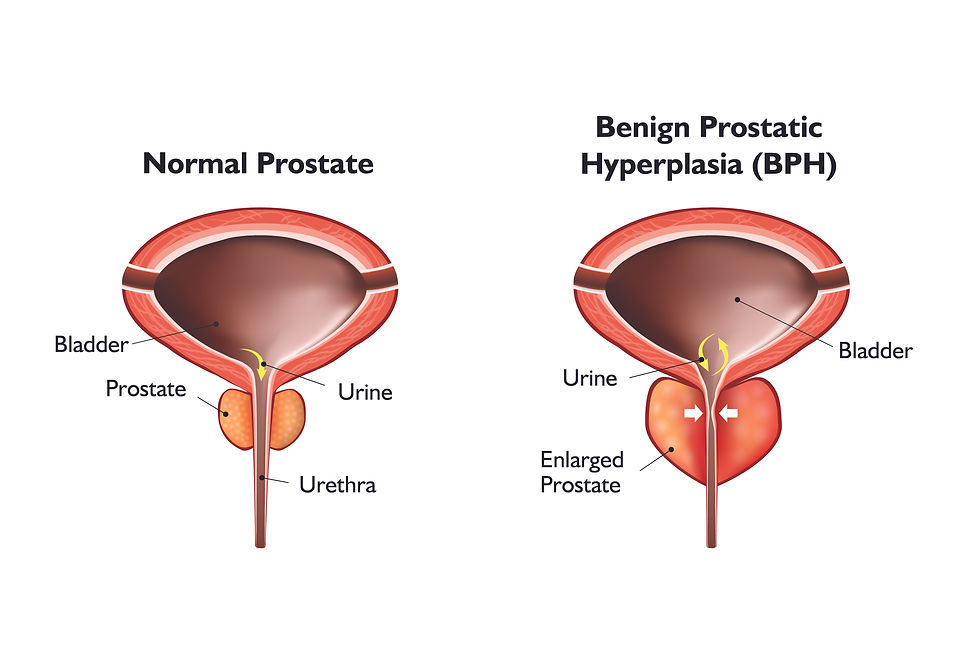
This pressure can lead to a range of symptoms, including:
Frequent urination, especially at night
Sudden urgency
Weak or slow urine stream
Difficulty starting urination
A feeling of incomplete bladder emptying
While BPH is not life-threatening, the symptoms can significantly impact quality of life when left unaddressed.

Why it happens
BPH is largely driven by age-related hormonal changes. Over time, shifts in testosterone and other hormones such as dihydrotestosterone (DHT) can contribute to gradual prostate growth. Because this process is slow, symptoms often develop gradually and may not be noticeable until they begin to affect daily routines.
Treatment options
There is no one-size-fits-all approach to BPH. Management options may include lifestyle changes, medication, or minimally invasive procedures depending on symptom severity and individual goals.
One minimally invasive option is the UroLift® System, offered at the Urology Institute.
UroLift is designed to relieve obstruction caused by an enlarged prostate by physically holding back excess prostate tissue, opening the urethra without cutting, heating, or removing tissue.

During the procedure, small implants are placed to create and maintain a clearer pathway for urine flow. Because it is minimally invasive, it is often performed in an outpatient setting with a focus on faster recovery compared to traditional surgical approaches.
Potential benefits include:
Relief of urinary obstruction symptoms
Preservation of normal prostate tissue
Minimally invasive approach
Quick return to normal activity for many patients
Comfort, care, and what patients can expect
For many people, the hardest part isn’t just the symptoms — it’s the uncertainty around treatment. That’s why urology teams place a strong focus on patient comfort, education, and clear communication throughout the entire process.
From the first consultation, patients are typically guided through what to expect, what the procedure involves, and how recovery is managed. Questions are encouraged, and the goal is to make sure nothing feels rushed or unclear.
During minimally invasive procedures like UroLift, comfort is a priority. Care teams use anesthesia or sedation options depending on the case, and the procedure itself is generally designed to minimize discomfort and reduce recovery time. Afterward, patients are given clear instructions and support so they know what normal recovery looks like and when to reach out with concerns.
The overall approach is centered on helping patients feel informed, supported, and at ease — not just treated.

The importance of addressing symptoms
BPH symptoms may seem manageable at first, but over time it can affect more than just bathroom habits — including sleep quality, energy levels, confidence, and overall lifestyle.
The encouraging part is that treatment options continue to evolve, offering patients more ways to address symptoms in a way that aligns with their needs and comfort level.
For individuals experiencing ongoing urinary symptoms, a consultation with a urology provider can help clarify what’s going on and whether options like UroLift may be appropriate. Getting started is easier than you think.
Frequently Asked Questions (FAQ)
Q: Is the UroLift® procedure covered by insurance and Medicare in Illinois?
A: Yes. UroLift® is covered by Medicare, Illinois Medicaid plans, and major commercial health insurance providers when medical necessity for BPH treatment is established.
Q: Does the UroLift® procedure cause erectile dysfunction or incontinence?
A: Clinical studies demonstrate that the UroLift® System does not cause new-onset, sustained erectile or ejaculatory dysfunction. Because tissue is neither cut nor heated, nerve pathways surrounding the prostate remain preserved.
Q: How long does recovery take after getting UroLift®?
A: Most patients experience minimal downtime and resume normal daily activities within a few days. Unlike TURP surgery, most UroLift® patients do not require a urinary catheter home after the procedure.
Q: Who is an ideal candidate for UroLift® in Southern Illinois?
A: Men aged 45 and older experiencing frequent urination, night waking, weak stream, or urgency due to an enlarged prostate—who wish to avoid lifelong medication side effects or invasive surgery—are prime candidates. A consultation with Dr. Lawrence Hatchett confirms exact anatomical suitability.
Q: Does insurance cover treatments for BPH like the UroLift procedure?
A: Yes, diagnostic testing and treatments for BPH, including the UroLift System, are covered by most major insurance plans. We proudly accept Healthlink, as well as a wide network of other major providers including United Healthcare, Aetna, UMR, and Medicare. Our dedicated billing team is always happy to help you verify your specific coverage and benefits before you proceed with any treatment plan.
Take Control of Your Prostate Health & Sleep Through the Night
You don't have to accept broken sleep, weak flow, or restrictive daily medications as an inevitable part of aging. Experience the confidence of physician-led urologic care in Marion, Illinois.
Schedule Your BPH Consultation: Request an Appointment at Hatchett Rejuvenation
Call Urology Institutes & Hatchett Rejuvenation Direct: (618) 998-8500
Clinic Location: 3401 Heartland St, Marion, IL 62959


Comments